
123Fab
1 topic, 2 key figures, 3 startups to draw inspiration from
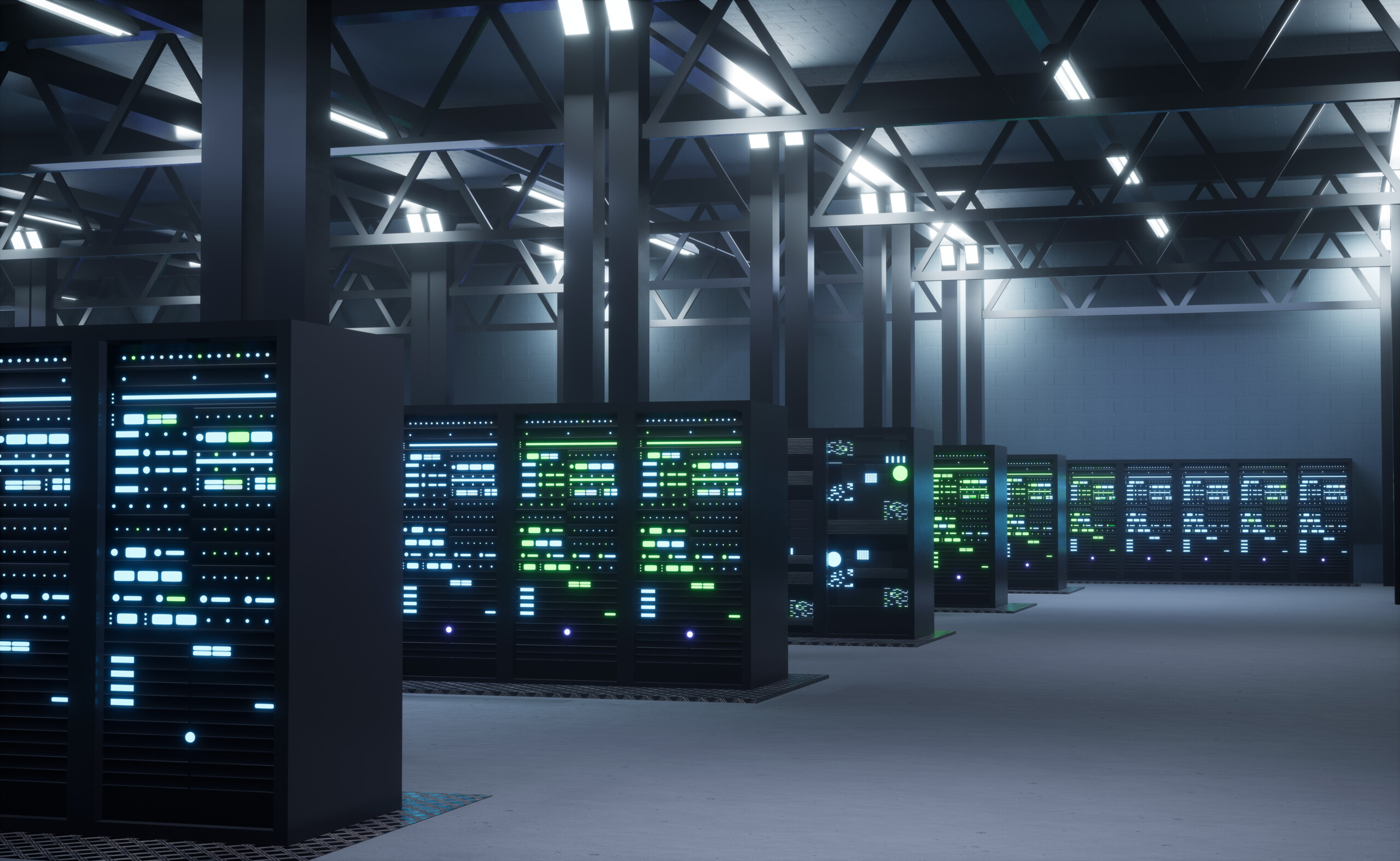
Because electricity is the main cost of computing, data centers are becoming the world’s fastest innovation engine for energy efficiency, and industry will benefit.
Data centers are often criticized for how much electricity they consume, and that criticism is justified. Nevertheless, it overlooks another an indirect innovation perk: as electricity is the main direct cost of running a data center and power directly determines their profitability, data center operators are trying to use it more efficiently. This is why the expected $5 trillion investment in computing infrastructure is not only for building more servers, but also for making those servers as energy-efficient as possible.
To improve their margins and keep up with the demand driven by AI, data centers are rapidly improving chips, cooling systems, and software that controls how electricity is used. These efficiency gains are happening faster than in most other industries, precisely because energy costs are so central to their economics and because the demand is increasing so rapidly, making it a such a strong investable sector.
These energy-efficiency innovations are already spreading to other sectors. Telecom is an early example. As 5G networks pushed electricity demand higher, operators such as AT&T (US telecom) began using GPUs (Graphics Processing Units) originally developed for data centers to run network equipment more efficiently, cutting power use and operating costs by around 20%, according to an Nvidia case study.
In this article, we focus on two questions:
- What pillars are used to improve the energy efficiency of data centers?
- Which technologies could benefit from this investment wave, and how far will these gains extend into industry, manufacturing, and utilities?
The data center energy trend in numbers:
In 2024, data centers consumed approximately 415 TWh of electricity globally, roughly 1.5% of total electricity consumption. Geographically, the United States accounts for 45%, followed by China (25%) and Europe (15%).
Data center energy use has grown at 12% annually over the last five years, four times faster than total global demand, according to the International Energy Agency (IEA). These projections indicate this could reach 945 TWh by 2030 (nearly 3% of global demand).
Why does energy efficiency matter?
Despite high growth projections, the relationship between digital activity and energy use within our data centers is not linear.
Between 2005 and 2024, while internet traffic increased from 1 to 5.5 billion users and the digital economy’s share of GDP surged, data center energy use only rose from 1% to 1.5% of global demand. Historically, efficiency gains have prevented digital growth from triggering a proportional explosion in energy demand.
The three pillars of data center efficiency innovation
- Next-generation hardware
Each new generation of chips becomes much more energy-efficient than the previous one. For example, the current Nvidia B200 GPU uses 60% less energy per unit of computing than the previous generation, which itself was 80% more efficient than the one before. These chips are not used only in data centers; they also make robots and factory automation systems more energy efficient.
- Intelligent software
AI-powered tools are increasingly used for predictive maintenance and heat management in an industrial context. In a landmark case in 2016, DeepMind reduced Google’s cooling costs by 40% using its machine learning algorithm on its own servers.
- Integrated systems
The integration of optimized hardware with intelligent software management yields even better results. Today, industrial giants like Siemens and GE are applying these algorithms combined with custom hardware to reduce manufacturing energy use by 15-20%, thanks to predictive maintenance and real-time energy efficiency improvements.
From server to factory floor: five technologies already crossing over
Technologies first developed for data centers are now allowing new heavy industry usage. Both settings face similar challenges, managing complex systems, high energy use, and cooling or process optimization. Thus, improvement in data centers should be transferable to those industrial cases.
The following five technologies are examples of how improvement into the pillars are being put to work on the factory floor:
| Data Center Pillar | Industrial Crossover | How they link |
| Next-gen Hardware | Digital Twins | Powerful chips allow factories to run complex virtual simulations. |
| Intelligent Software | Process & Thermal Optimization | AI that cools servers is now used to manage furnace heat and pump speeds. |
| Integrated Systems | Predictive Maintenance & Smart Grids | Combining sensors with AI helps factories predict repairs and balance power use. |
- Predictive maintenance
Machine learning models originally designed to monitor servers (e.g., the example of DeepMind data centers) can now predict failures in industrial equipment before they happen by analyzing sensor data (vibrations, temperature, power draw).
Example: Siemens’ AI-driven maintenance platform identifies early signs of bearing wear in motors, cutting maintenance costs and lowering energy use in manufacturing lines.
- Real-time process optimization
Software that adjusts cooling, airflow, and load balancing in data centers now helps optimize industrial process parameters, furnace temperature, compressor load, or pump speed, in real time. These AI optimizers can lower the energy intensity of industrial processing plants by 5-15%, and increase EBITDA by 3-5%, according to McKinsey.
- Digital twins and simulation tools
Digital twins, realistic virtual models of physical assets, were first used for data center planning and fault forecasting. In a factory, these digital replicas simulate production lines to test process improvements safely and improve resource flows. Plants using digital twins often achieve up to 10% energy savings.
- Smart grid and demand response systems
Cloud computing-inspired dynamic energy scheduling systems now balance industrial electricity loads with real-time grid conditions. AI can plan when to run high-consumption equipment during periods of low cost or high renewable energy availability, reducing total energy use by 5–20% according to the IEA calculations.
Example: BASF’s chemical plants in Europe integrate AI platforms that shift noncritical processes to coincide with peak renewable power supply, lowering both emissions and costs.
- Thermal management technologies
High-efficiency cooling from data centers, such as liquid cooling and waste heat recovery, is being adapted for heat-intensive manufacturing. These techniques capture waste heat from furnaces and reuse it for pre-heating or other steps, minimizing total fuel input.
To conclude, while data centers are indeed an energy pit, electricity being the dominant operating cost, they are becoming one of the world’s most well-funded R&D labs for energy efficiency innovation worldwide. And of course, these advancements will not remain confined to server halls. As shown in telecom, manufacturing, chemicals, and utilities, some technologies developed to minimize data center energy use are now already finding new usage in other energy-intensive industries, where even small percentage gains translate into big absolute savings.
2 Key Figures
945 TWh
Projected global electricity consumption of data centers by 2030, representing just under 3 percent of total global demand and equivalent to twice France’s current electricity consumption.
$5 trillion
Expected spending on AI-related infrastructure over the next five years, an amount roughly equivalent to Germany’s 2025 GDP.
3 startups to draw inspiration from

NLM Photonics
Recently closed a Series A (Jan 2025). Their organic electro-optic modulators enable up to a 30% reduction in network power consumption and can be manufactured in standard CMOS fabs.
Lightmatter
Following a $400M Series D (Oct 2024), they are commercializing photonics-based computing, using light instead of electricity to perform calculations with drastically lower thermal output.
EcoDataCenter
Focuses on climate-positive data centers by utilizing Nordic cold climates and integrating waste heat recovery into district heating networks.
Interested in a startup landscape or in an insights report?
Please fill out our contact form so that we can get back to you very quickly with our product offer.
Want to subscribe to our 123Fab?
Fill out our form to receive the latest insights into your inbox.